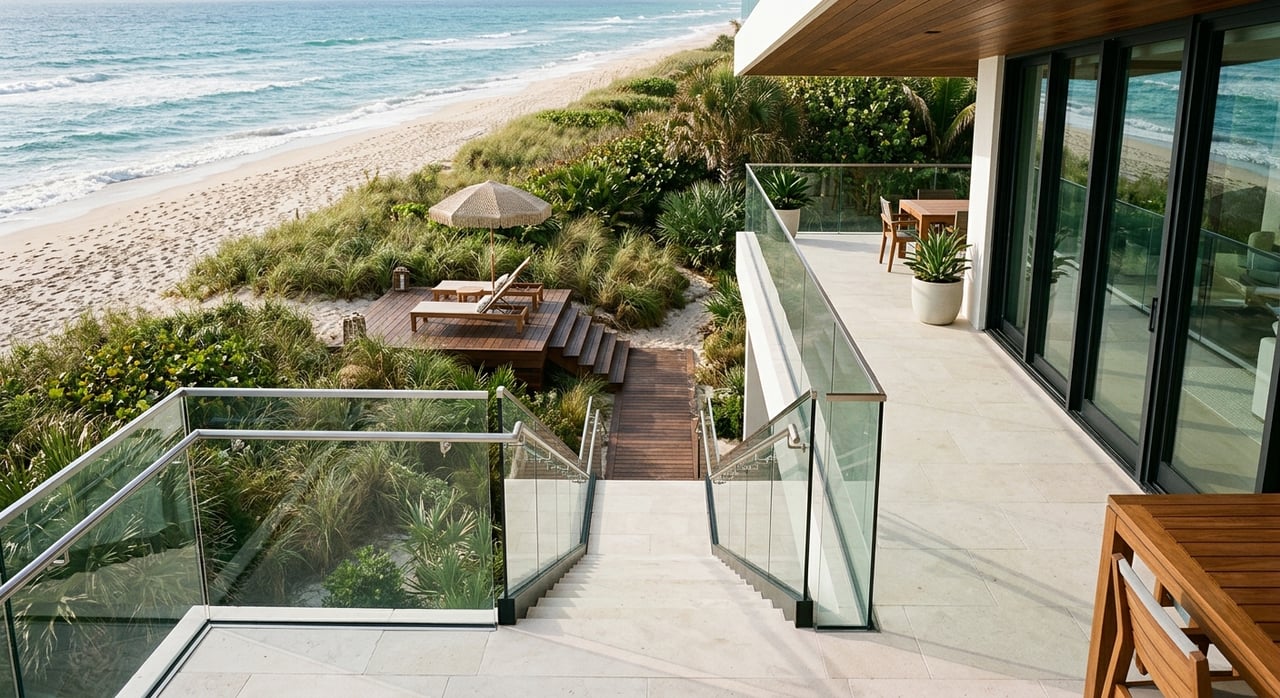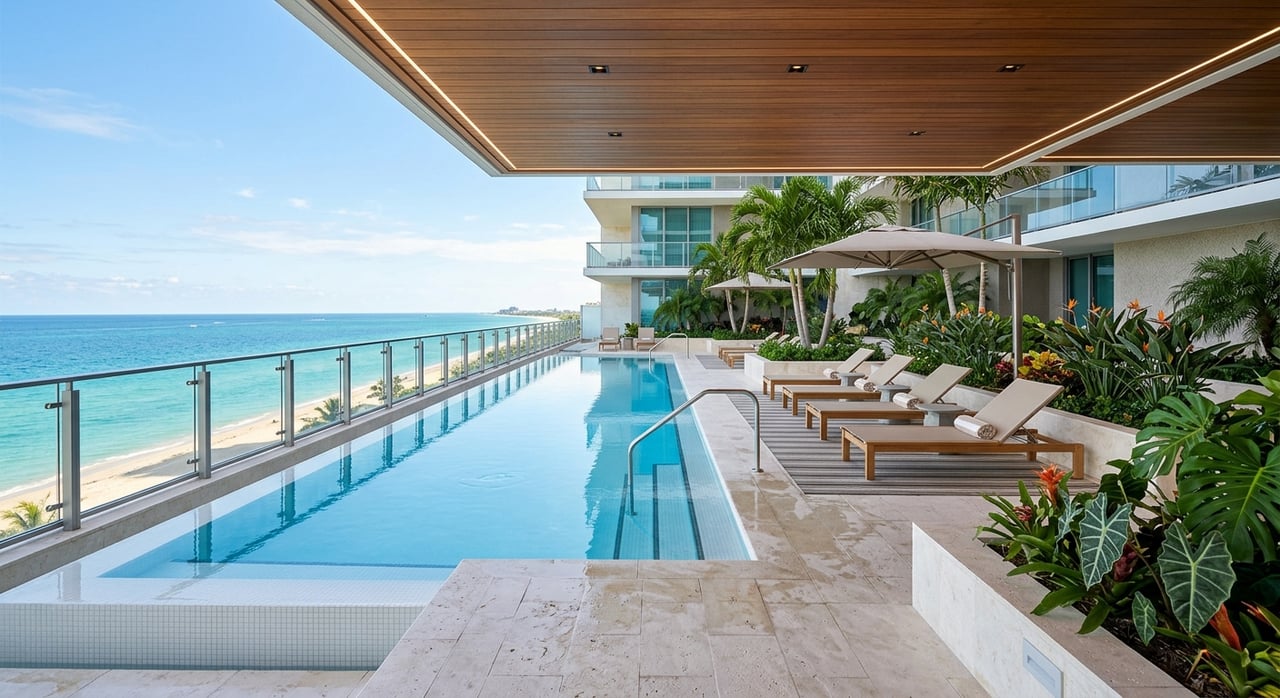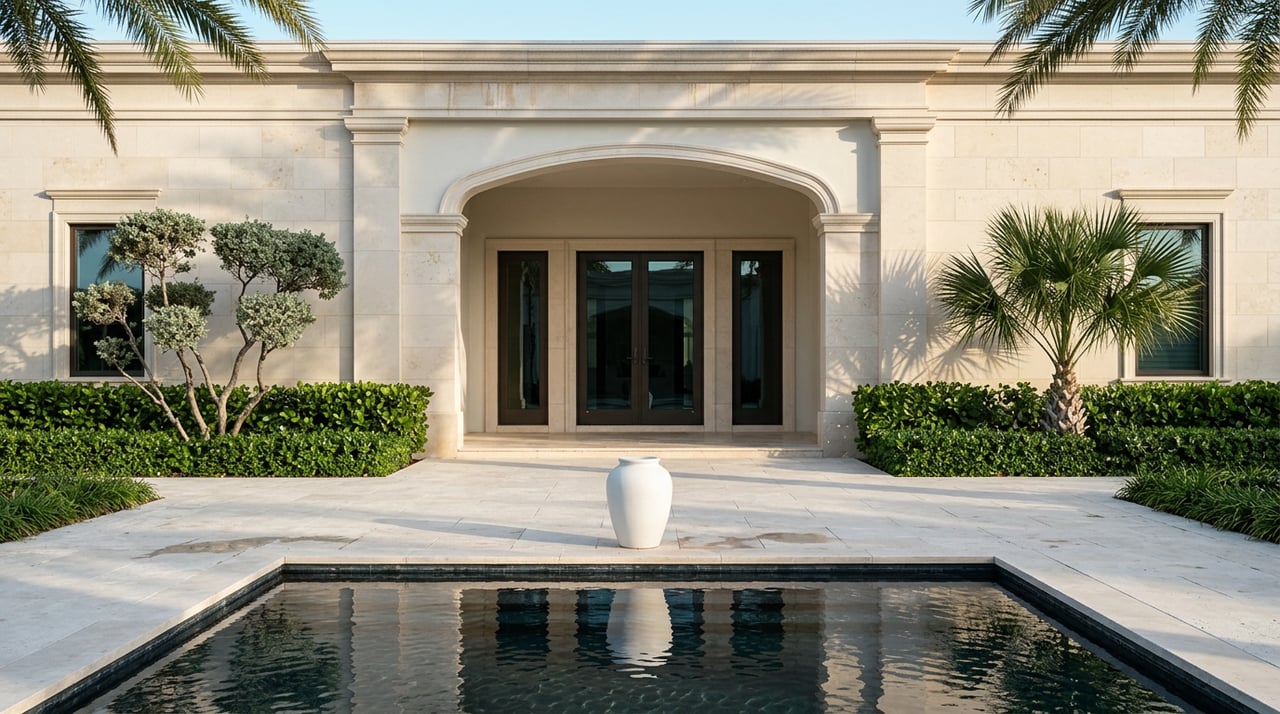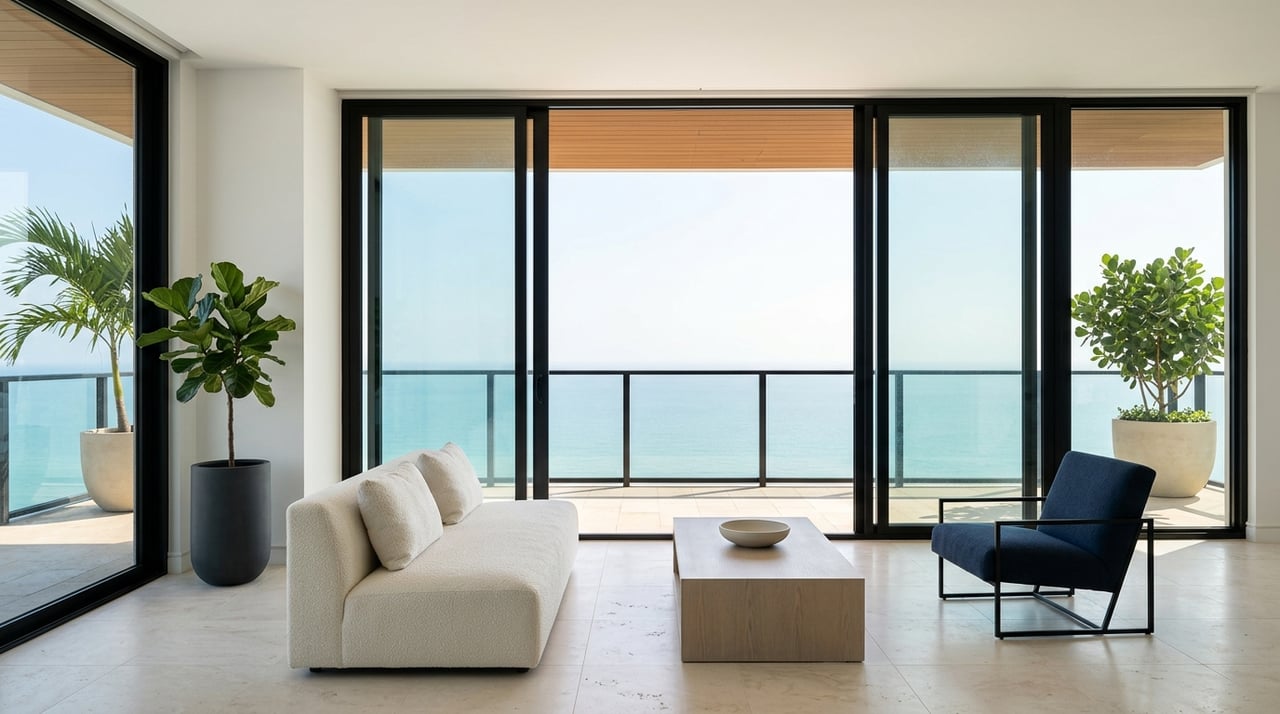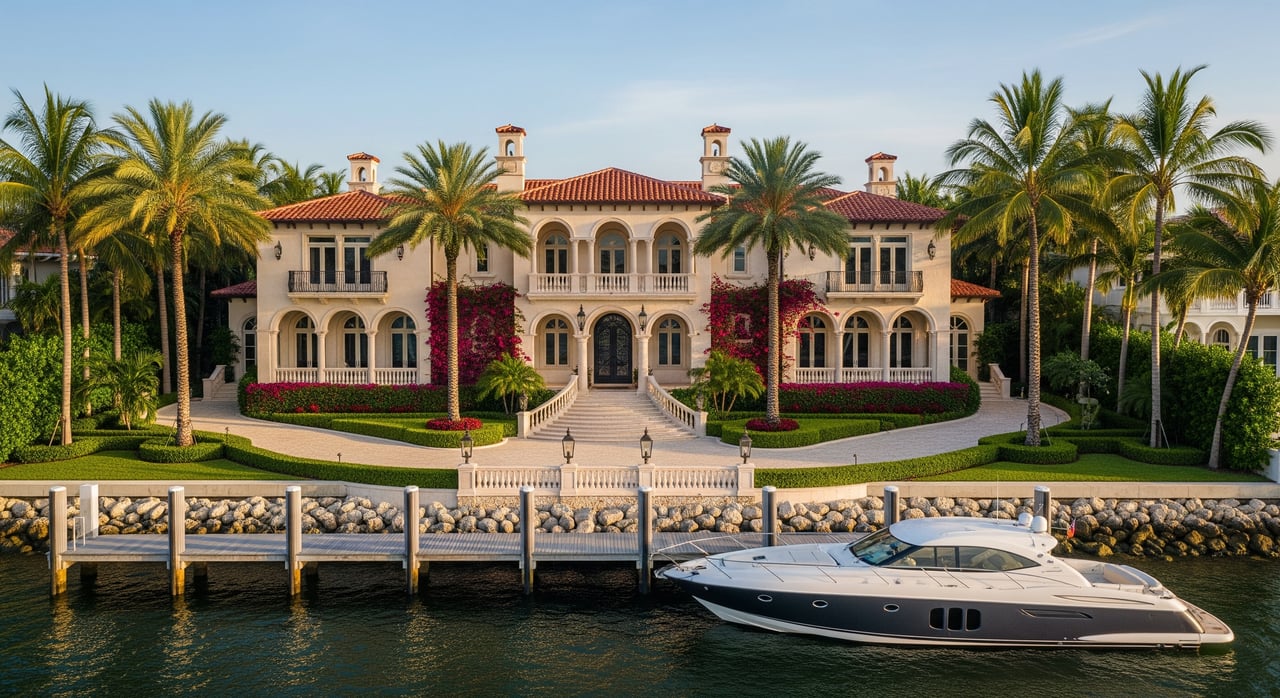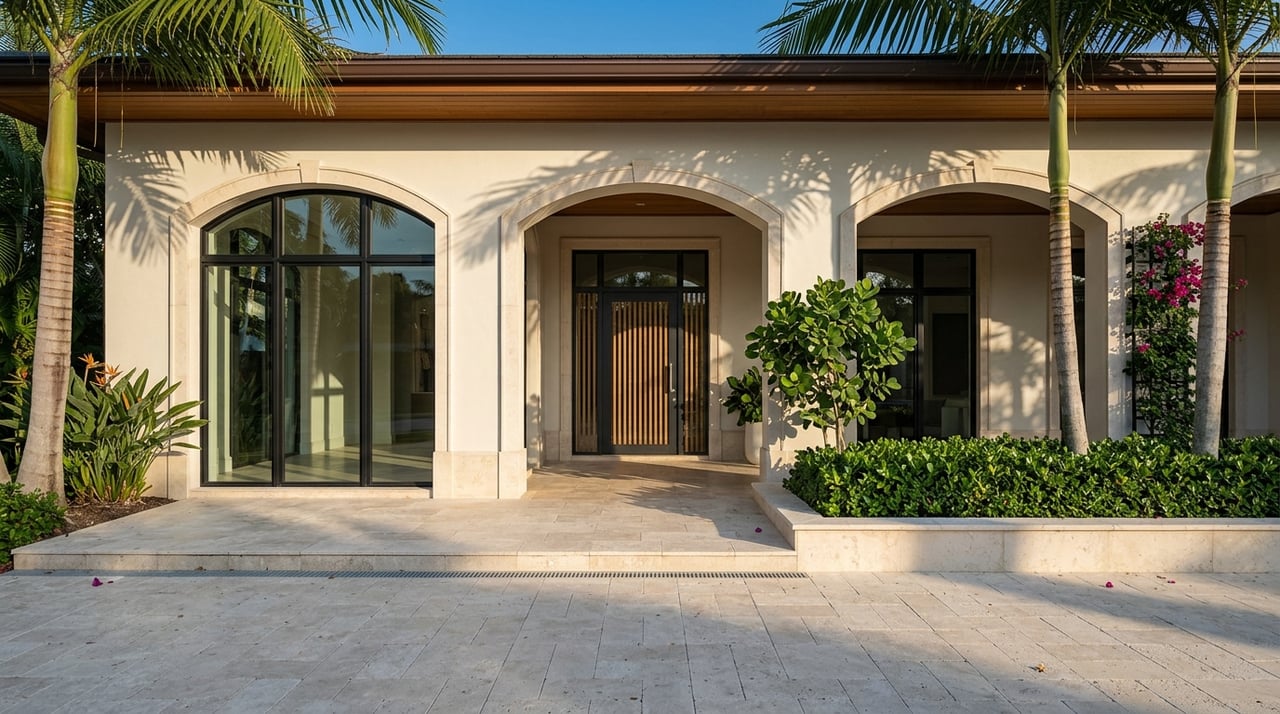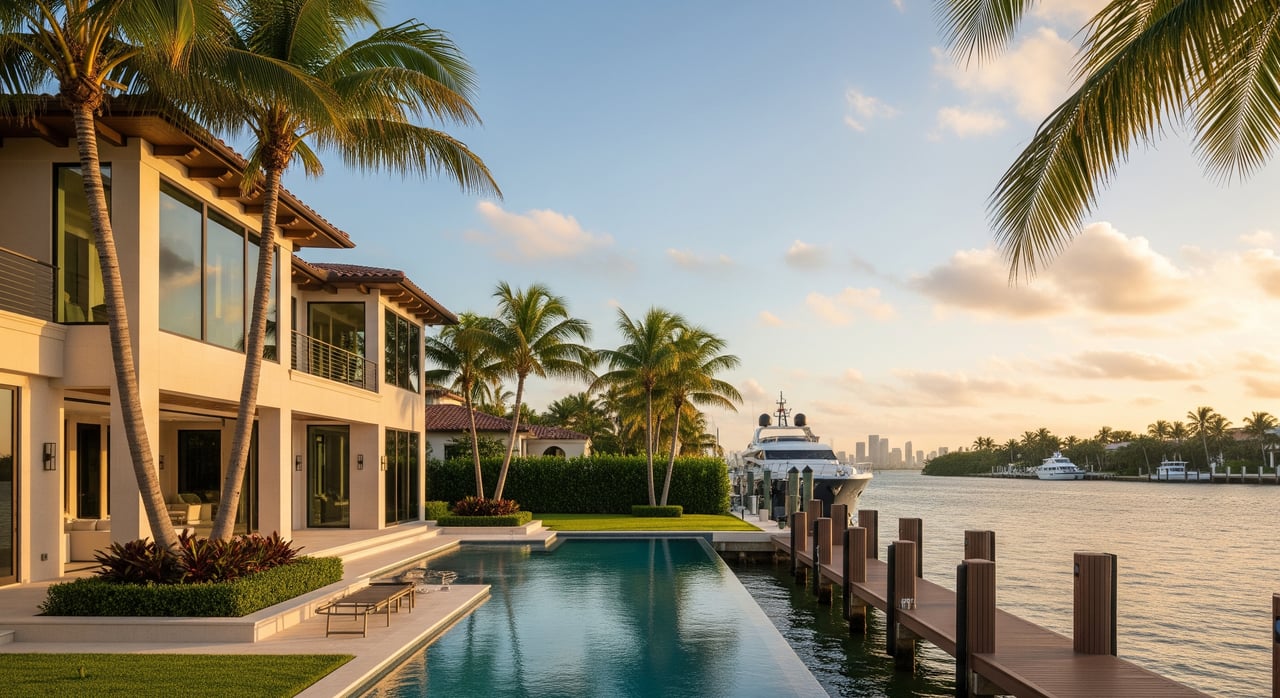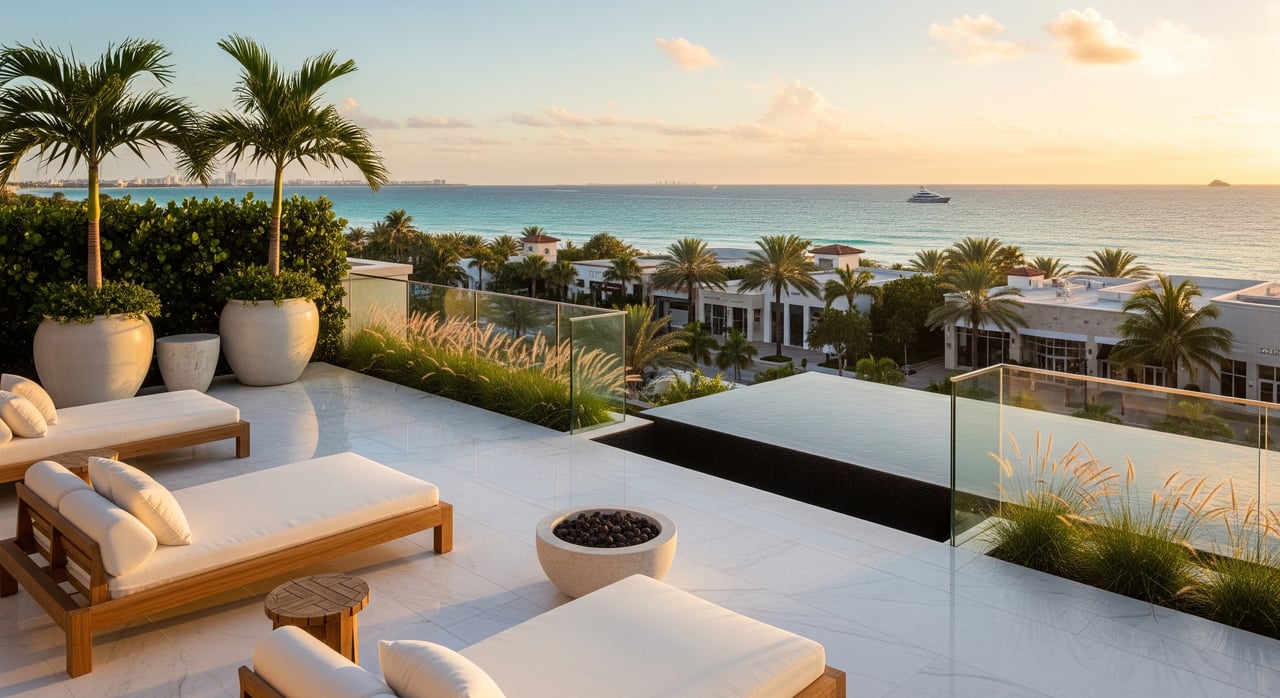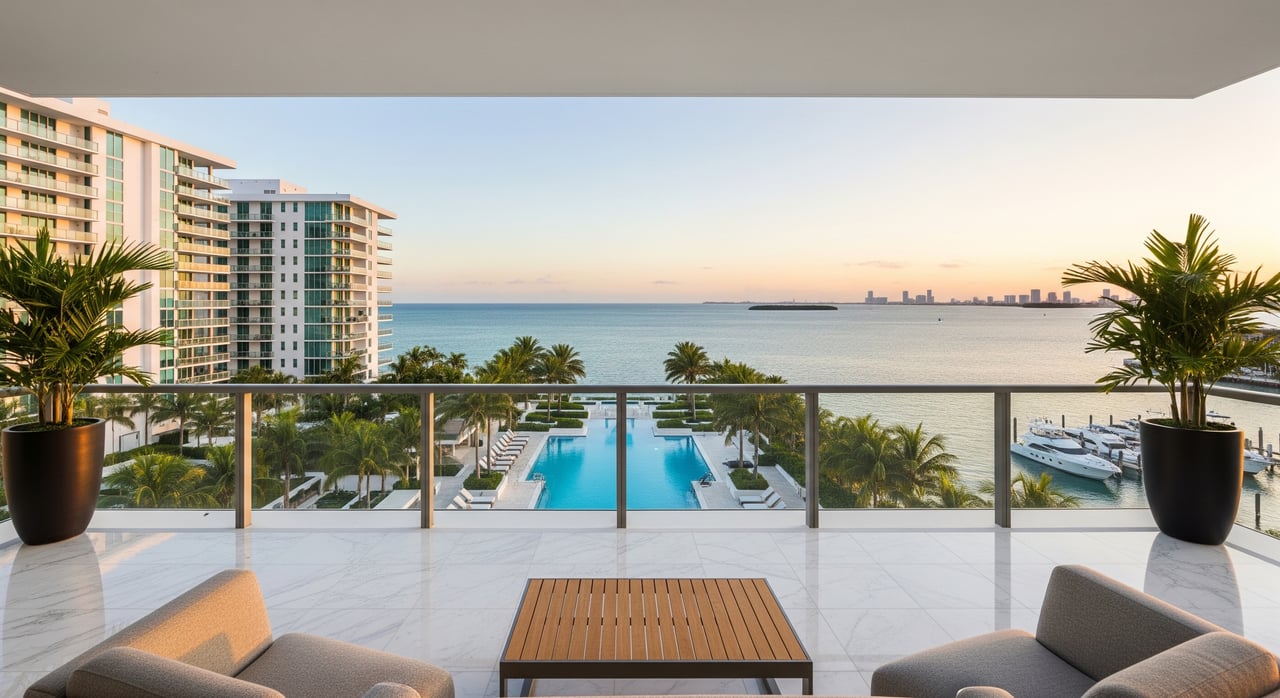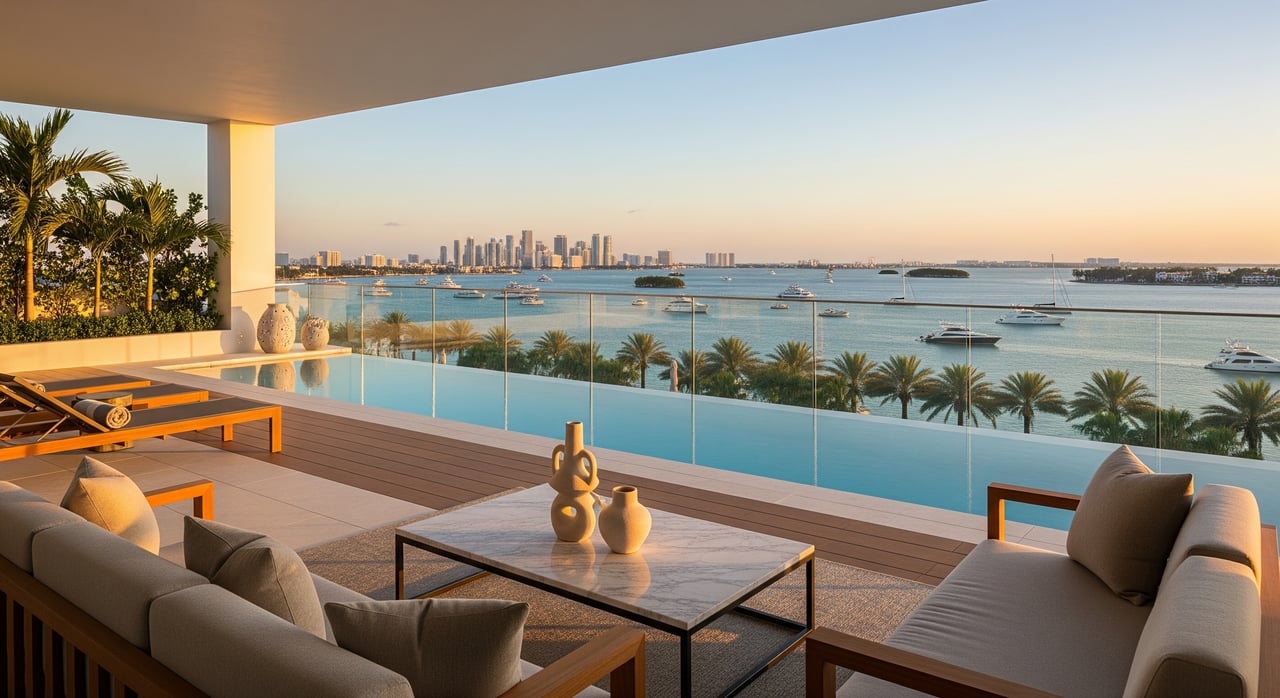
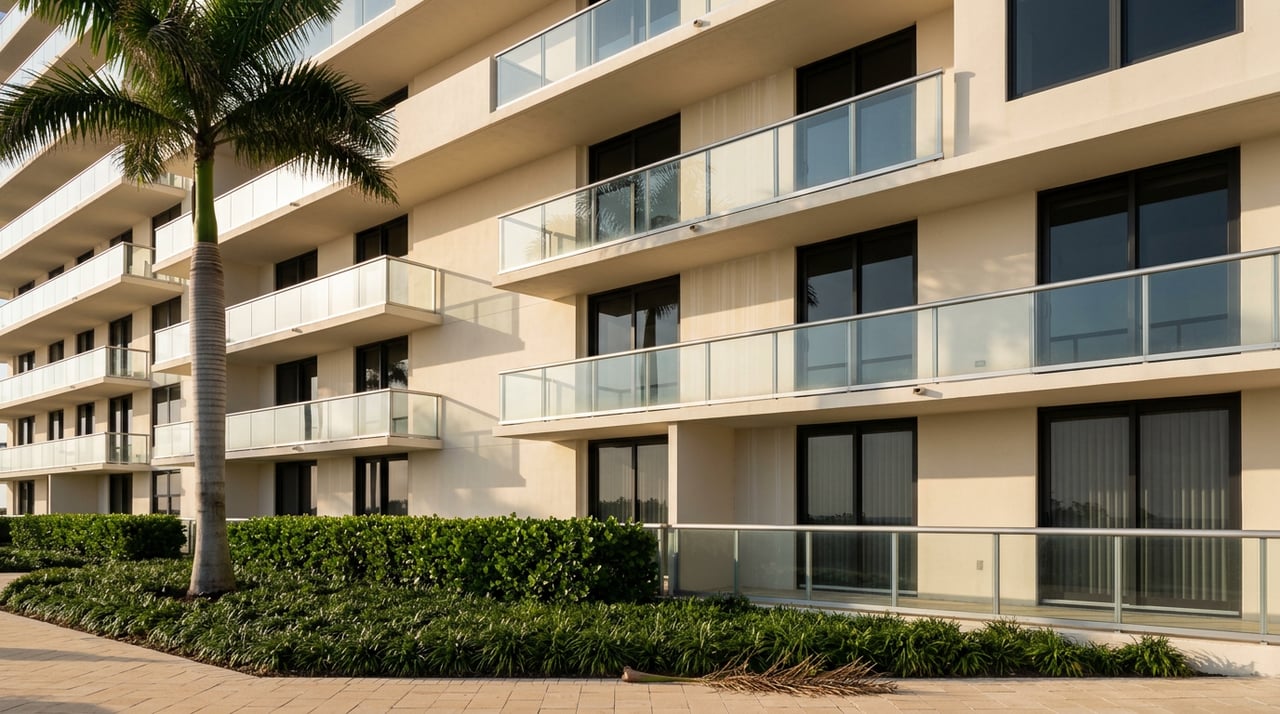
A studio at Harbour House recently listed for $420,000 reads like the easiest entry point into Bal Harbour there is. Four hundred and thirty-eight square feet, a private balcony over the entrance gardens, access to a private beach, a business center, even a theater. The listing remarks also include one line: a special assessment of $305.73 a month, running through May 2029.
That line is not a warning. It is closer to a gift. It tells a buyer exactly what they are paying, exactly when it stops, and exactly what it is funding. The gap between buildings that can tell you the number and buildings that cannot yet tell you anything is worth understanding before an offer gets written.
The calendar that actually matters
It is tempting to assume a building's age predicts its risk. Harbour House went up in 1964. Balmoral followed in 1977. The Tiffany in 1982. Bal Harbour Tower in 1990. The Palace in 1994. Three decades separate the oldest from the newest, and none of them are considered distressed properties. They are professionally managed, oceanfront addresses with waiting lists for the good stacks.
Age is not what changed for these buildings this year. The law did. Under Florida Statute 718.112(2)(g), condo associations lost the ability to waive or underfund reserves for eight structural components, roof, load-bearing structure, fireproofing and fire protection, plumbing, electrical, waterproofing, windows and exterior doors, plus a catch-all eighth category that now applies above $25,675 for 2026 when a component's failure would compromise one of the first seven. Associations with budgets adopted after December 31, 2024 lost the waiver option outright. Full funding under the Structural Integrity Reserve Study became mandatory on January 1, 2026, and the deadline for owner-controlled associations to complete that study in the first place was December 31, 2025, a deadline that has already passed as of this writing.
House Bill 913, effective July 1, 2025, gave boards more flexibility in how they raise the money. Loans, lines of credit, staged assessments instead of one lump sum. It did not give anyone permission to skip the funding. What that means in practice is that a 1964 building and a 1994 building are now graded on the same test. The question is not how old the tower is. It is whether the board actually did the study, and whether this year's budget lines up with what that study says the building needs.
New construction does not buy you out of the paperwork
There is a second assumption worth correcting, and it runs the other direction. Buyers touring Rivage, the 88-unit tower rising at 10245 Collins Avenue with a Related Group and Two Roads partnership behind it, tend to treat new construction as the one category exempt from all of this. It is not. According to The HOA Guide, the SIRS requirement is triggered by a building's height, three or more habitable stories, not by its age. The paperwork obligation does not disappear because the concrete is new. It just starts from zero instead of picking up decades of deferred maintenance.
That distinction matters because it reframes what a buyer should actually be comparing. Not "old building versus new building." Compliant paperwork versus paperwork that does not exist yet, on either end of the age spectrum.
What the public numbers already show
| Building | Built | What the market is showing |
|---|---|---|
| Harbour House | 1964 | Resales closing near $950 per square foot as of mid-2026, with marketing windows running long |
| Balmoral | 1977 | Resales around $1,050 per square foot, mid-renovation, one recent listing showing the seller paying off the special assessment before closing |
| The Tiffany | 1982 | 1975 to 1995 vintage stock, subject to the same SIRS funding rules as its neighbors |
| Bal Harbour Tower | 1990 | Sales closing near $1,020 per square foot as of mid-2026, days on market averaging above 200 |
| The Palace | 1994 | Average list price near $1,436 per square foot |
| Majestic Tower | 1999 | Average list price near $1,859 per square foot |
| Oceana | 2016 | Contemporary luxury resales clearing above $2,000 per square foot |
| Rivage | Delivering 2026 to 2027 | Sky villa pricing quoted near $3,925 per square foot |
Read this table by construction year and it looks like a straight line, older buildings cheaper, newer buildings more expensive. Read it against the SIRS files and a different pattern shows up. Balmoral and Bal Harbour Tower sit within roughly $30 per square foot of each other despite a thirteen-year gap in construction date. What separates a building trading near $1,050 from one trading above $2,000 a few blocks away has much less to do with the view and much more to do with whether the reserve math is settled.
The one number worth asking for
Every seller's disclosure package includes a current-year budget. Every association with a completed SIRS has a recommended contribution schedule attached to it. A buyer who lines those two numbers up learns more from that comparison than from anything in the listing remarks.
When the budget line and the SIRS-recommended contribution match, the building is on schedule. When they diverge, an assessment is not being avoided. It is being deferred.
That single comparison is the reason a bounded assessment like Harbour House's $305.73 a month is more reassuring than a building with no SIRS on file at all. A number with an end date is a known cost. A missing study is an unknown one, and in Miami-Dade's 1975 to 1995 vintage stock, unfunded special assessments have been landing between $30,000 and $75,000 per unit in 2026, climbing past $100,000 where roof, concrete, and waterproofing scopes combine into a single project.
The document request before you write an offer
Before writing an offer on any Bal Harbour building older than twenty years, a buyer should ask for five things, and expect the seller or the association to produce them within a matter of business days:
- The most recent Structural Integrity Reserve Study and its funding schedule.
- The milestone inspection report, including any Phase 2 findings and the repair timeline those findings trigger.
- The two most recent annual budgets and reserve schedules, with the current reserve balance broken out line by line.
- Board and membership meeting minutes covering the past two years, where reserve transfers, waivers, and pending assessments get recorded before they show up anywhere public.
- The master insurance declarations, including wind and flood coverage limits and deductibles.
A seller who cannot produce these within roughly five business days of the request is not necessarily hiding something. But the silence itself is information. It usually means the paperwork does not exist in the form a buyer needs, which is its own answer.
What a bounded assessment looks like next to an open one
The contrast between Harbour House and Balmoral is instructive. Harbour House's studio carries a known, dated, monthly number. Balmoral, mid-renovation on its lobby, pool, hallways, tennis courts, and balconies, has at least one listing where the seller had already paid off the assessment in full, handing the buyer a clean slate and a building further along in its capital work. Both are workable purchases. What makes them workable is that the number is visible and finite, not that the number is zero.
The buildings that create real exposure are the ones where a buyer cannot get a straight answer on either the SIRS status or the reserve balance. That uncertainty does not show up in a listing photo. It shows up in a document request that goes unanswered.
FAQ
Does a completed milestone inspection mean a building is free of future assessments? Not necessarily. A milestone inspection answers whether the building is structurally sound today. The SIRS answers whether the reserves are funded to cover tomorrow's work. A clean milestone report paired with an underfunded SIRS still points toward an assessment down the road.
Is Rivage really exempt from all of this because it's new construction? No. New construction is not automatically exempt; Rivage will need a Structural Integrity Reserve Study on file if it qualifies.
Can financing fall through because of a building's SIRS status? It can. Lenders increasingly review reserve adequacy and SIRS or milestone completion as part of condo project approval, and buildings without current documentation risk being flagged in ways that affect conventional financing.
Buying into Bal Harbour has always meant buying into a building as much as a unit. In 2026, with mandatory reserve funding now in effect, that has never been more literally true. If you are weighing a specific address, a specific line, or trying to read what a building's paperwork says about its next five years, Marine Rollins can walk through the file with you before you write the offer, not after.
This article is general information, not legal, tax or financial advice. Consult a qualified professional about your situation.