Every buyer comparing Bal Harbour towers eventually asks the same question: why does a residence at Rivage list near $3,925 per square foot while a comparable oceanfront unit two blocks south trades closer to $1,000? The intuitive answer is age. The accurate answer, in mid-2026, is reserves.
Florida's post-Surfside compliance regime finished its grace period on December 31, 2025, and the spread between vintage and new-construction Bal Harbour condos now behaves less like an aesthetics premium and more like a priced-in insurance policy against special assessments. If you are underwriting a purchase this summer, the friction that catches buyers off guard is no longer the inspection contingency. It is the reserve study you can pull off the association's website before you ever tour.
The spread nobody's naming out loud
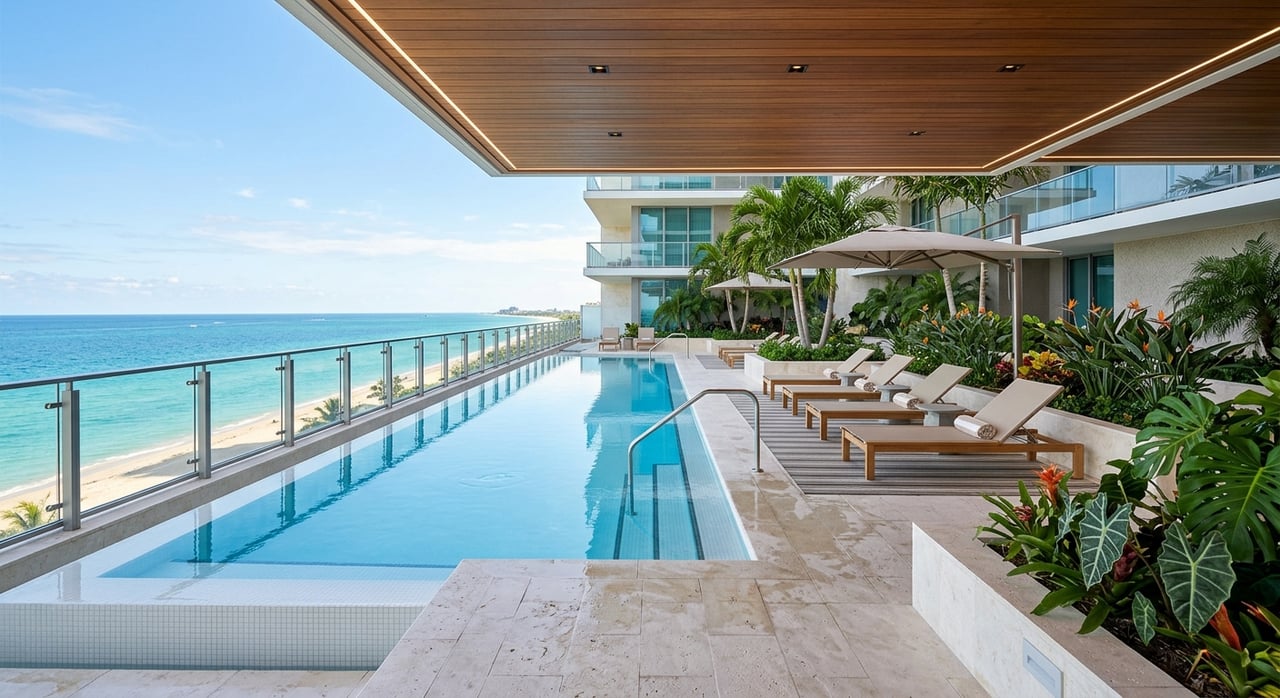
Bal Harbour's oceanfront inventory is unusually easy to line up by decade. The buildings sit within a few blocks of each other on Collins Avenue, share a beach, and offer broadly comparable amenity packages. What separates them, on paper, is vintage.
| Building | Year built | Avg. asking $/sf |
|---|---|---|
| Balmoral (9801 Collins) | 1977 | ~$1,039 |
| Palace at Bal Harbour (10101 Collins) | 1994 | ~$1,436 |
| Majestic Tower (9601 Collins) | 1999 | ~$1,859 |
| One Bal Harbour (10295 Collins) | 2008 | ~$2,155 |
| St. Regis Bal Harbour (9701–9705 Collins) | 2012 | ~$3,230 |
| Oceana Bal Harbour (10201 Collins) | 2017 | ~$2,889 |
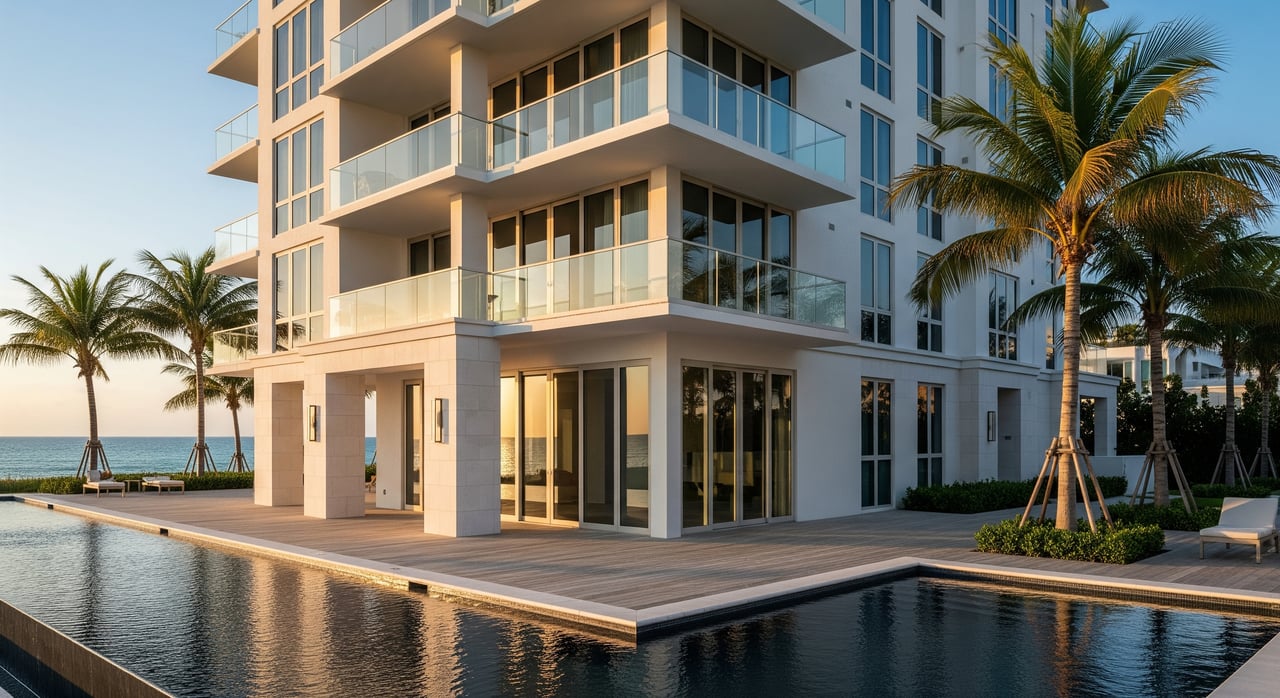
| Rivage Bal Harbour (10245 Collins) | pre-construction | ~$3,925 |
At the village level, the mix produces the widest per-foot dispersion in luxury Miami. As of July 2, 2026, the 18 active Bal Harbour listings tracked in one MLS-fed dashboard averaged $2,398 per square foot with an average of 327 days on market, while the eleven residences that actually closed in the trailing 180 days averaged $3,391 per square foot. Sold product is pricing at a premium to listed product. The direction of that gap is the entire story.
Why the discount is a reserve discount, not an age discount
Under Florida Statute 553.899, any condominium or cooperative building of three or more habitable stories must complete a milestone structural inspection when it turns 30 years old, or 25 years if the local enforcement agency has designated the property as coastal. Bal Harbour's oceanfront line sits squarely in the 25-year cohort. Every tower in the table above except Rivage and Oceana is already inside its first inspection window or approaching it.
The mechanism that changed the pricing math is the Structural Integrity Reserve Study. Associations existing on or before July 1, 2022 were required to complete a SIRS by December 31, 2025, and pre-Surfside reserve waivers, the tool that kept monthly dues artificially low for decades, are no longer available for structural components. Where a SIRS identifies underfunding, the association's only real options are dues increases, special assessments, or a loan against the building.
Boards are passing emergency special assessments to bridge the gap between their current empty accounts and the millions of dollars required for roofs, load-bearing walls, and fire protection systems.
That reality has been reshaping seller behavior across coastal Miami-Dade all year, and it is why the Bal Harbour PPSF ladder now reads as a risk curve. A 1977 tower is not cheaper than a 2017 tower because the ocean view is worse. It is cheaper because the buyer inherits a documented repair schedule and a funding plan for it.
What January 1, 2026 changed for buyers
HB 1021 took effect on January 1, 2026 and requires condominium associations with 25 or more units to publish governing documents, budgets, reserve studies, and milestone inspection reports through a dedicated owner-accessible website. Owners have a statutory right to view the SIRS and milestone reports within 30 days of completion. For buyers, that transparency requirement quietly rewrote the diligence timeline.
Until this year, the reserve conversation happened during the condo document review window after a contract was signed. In 2026, a serious buyer can read the SIRS, the milestone Phase 1 report, and any Phase 2 findings before writing an offer, and can price the building's assessment exposure into the offer itself rather than negotiating a credit later. The buildings that will hold value are the ones whose boards embraced this transparency early. The buildings whose reserve studies land unfavorably will see it reflected in per-foot pricing before the listing agent adjusts.
Financing follows the same logic. Lenders are increasingly conditioning condo approval on milestone compliance, and government-backed products are already unavailable in noncompliant buildings. A Bal Harbour buyer who intends to finance rather than close all-cash has a narrower list of eligible buildings than the sticker inventory suggests.
The land-side signal that resets everything above it
On May 18, 2026, a trust connected to the estate of the late homebuilder John Lang Looby closed the sale of 220 Bal Bay Drive for $31 million, according to The Real Deal's South Florida Top Deals report. The 3,500-square-foot home, built in the 1960s on a nearly 21,000-square-foot oceanfront parcel, is being marketed as a teardown. The lot had not changed hands since the 1970s. The closing came in one million dollars above ask.
Bal Harbour has roughly 60 single-family parcels and no new buildable single-family supply. When dirt trades at that basis, every condo tower with a large footprint and a thinning reserve becomes a candidate for the same land-value math that produced Rivage on the former Carlton Terrace site. The 2.55-acre Carlton Terrace deal is the template, and the 220 Bal Bay comp is now in every underwriter's model for what a Bal Harbour development site is worth on a per-square-foot basis of land. That is the real long-run floor beneath the vintage-tower discount.
How to read a Bal Harbour building before you tour
- Pull the association website. Under HB 1021, 25-plus-unit buildings must post budgets, the SIRS, and any milestone inspection reports. Their presence, or absence, is a data point.
- Confirm the certificate-of-occupancy year and count forward. Coastal 25-year and 30-year triggers are firm dates, not estimates.
- Ask specifically whether the association has moved to Phase 2 testing. Phase 2 is only triggered when Phase 1 identifies substantial structural deterioration, and it carries a 365-day repair clock from the report date.
- Read the reserve funding schedule inside the SIRS, not the summary. The funding plan is what determines whether monthly dues rise gradually or arrive as a lump-sum assessment.
- Compare quoted per-foot pricing against the ladder above. A residence priced meaningfully below its cohort is either an opportunity or a signal that something in the association's financials warrants a second read.
None of this replaces the work of a hospitality-grade broker who knows which board rooms are ahead of the compliance curve and which are still catching up. The buildings that quietly did the reserve work in 2023 and 2024 are the ones showing up in the sold column at $3,391 per foot, not the listed column at $2,398.
FAQ
Are new Bal Harbour condos exempt from milestone inspections? Newer buildings are simply not yet inside the 25-year coastal window. Rivage, St. Regis, and Oceana will each enter that window in due course. The current premium reflects the multi-decade runway before their first inspection, not permanent exemption.
Does an all-cash purchase eliminate the reserve concern? No. Cash removes lender conditions, not the association's obligation to fund repairs. Every unit owner shares the assessment regardless of how the purchase was financed.
Is the Miami-Dade Condominium Special Assessment Program relevant to Bal Harbour owners? The county program, expected to reopen in early 2026, offers loans of up to $50,000 with a 40-year term to owners earning less than 140% of area median income. It is a signal of how broadly assessments are landing across the county, not a resource most Bal Harbour owners will qualify for.
Schedule a private waterfront consultation
Bal Harbour rewards buyers who arrive with the reserve study already read. If you are weighing a specific building or comparing towers across the village, Marine Rollins offers a hospitality-grade review of the association documents, the milestone timeline, and the per-foot math before you write an offer.